The Facts
Customer – Clade Engineering on behalf of Manchester City Council
Result – Arbeta Centre’s carbon footprint was significantly reduced
Timeframe – 12 Weeks
Constraints – Complex structure and adhering to guidelines
The Challenge
This energy decarbonisation project at the Arbeta Centre – which was partially funded by the Public Sector Decarbonisation Scheme (PSDS) – houses a multitude of businesses and was originally made up of three separate buildings, intricate planning and execution techniques were required to adapt the new building to use modern, sustainable, energy saving solutions.
The Solution
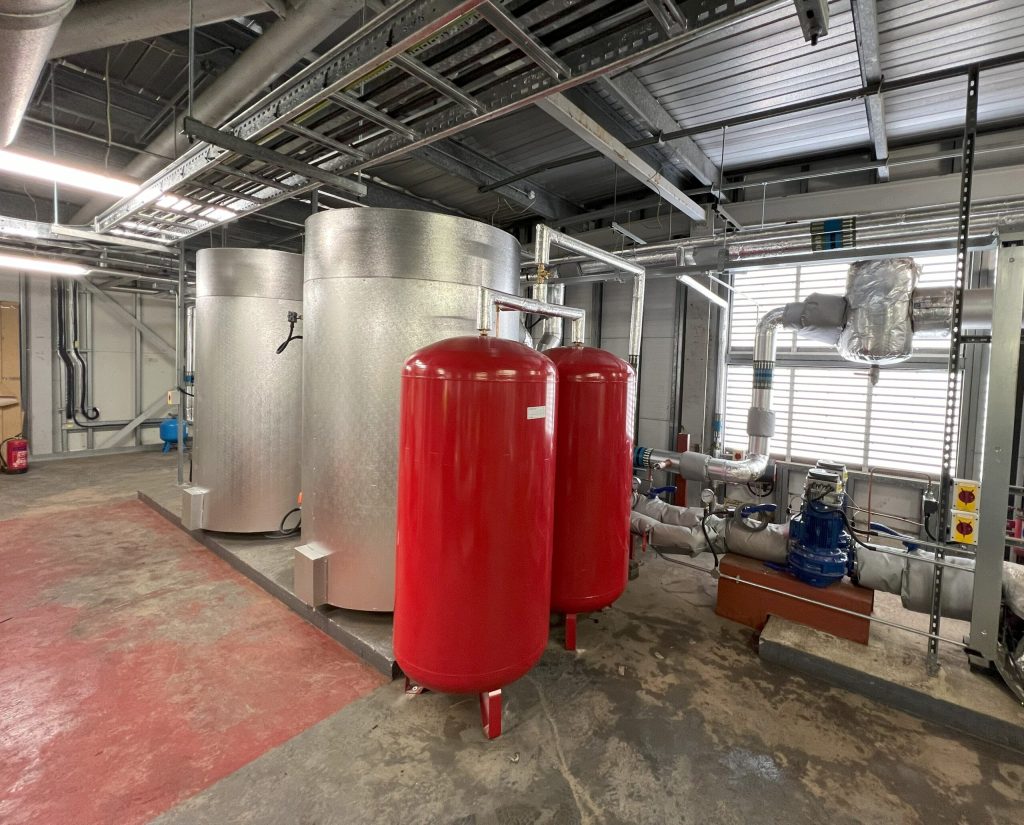
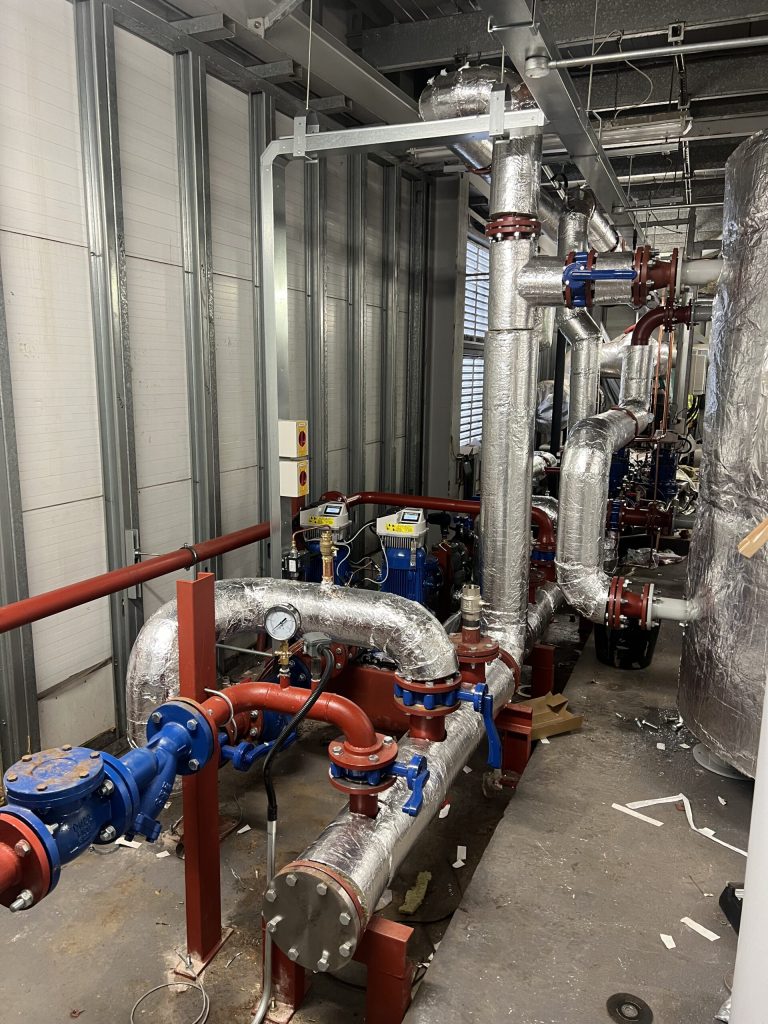
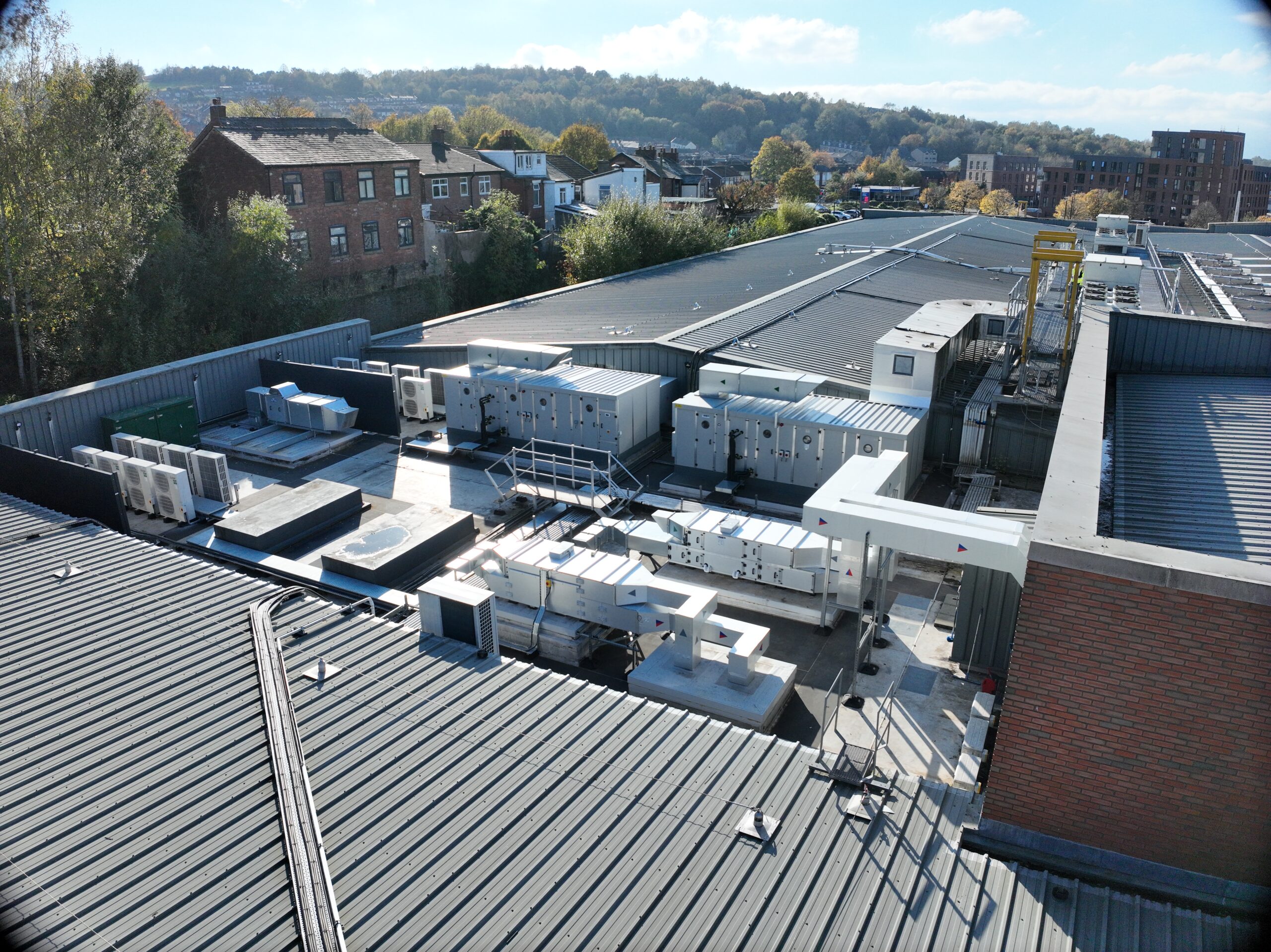
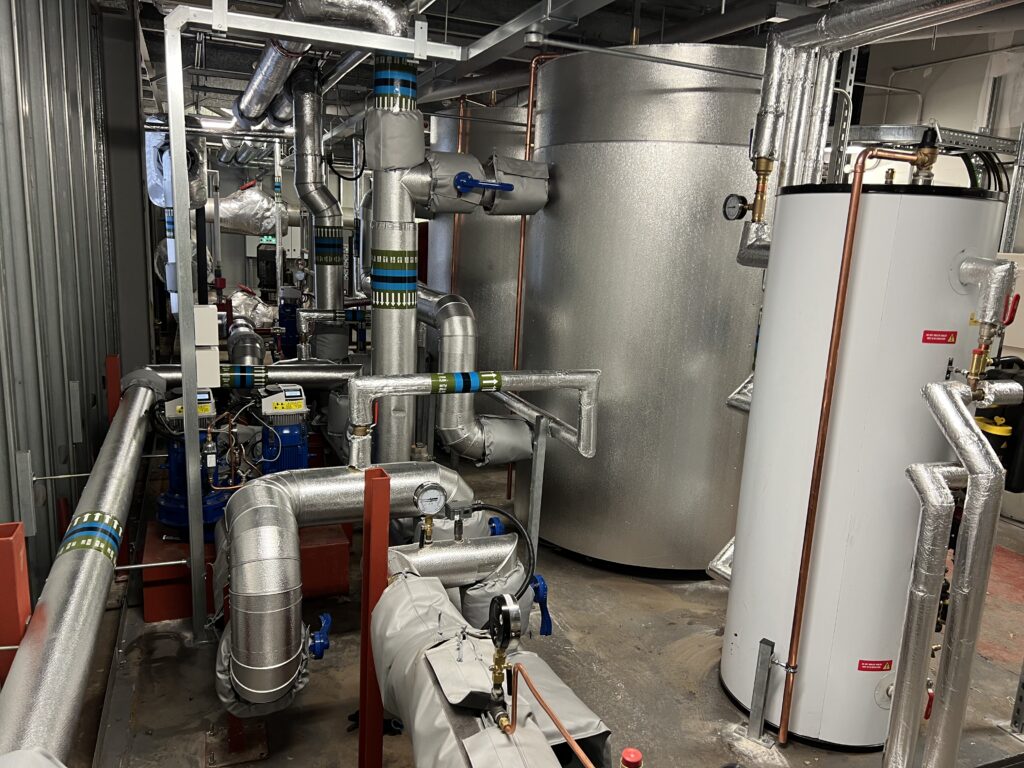
Sigma’s Mechanical and Engineering (M&E) team collaborated with a number of third parties to develop a multifaceted approach to the decarbonisation project, replacing old, inefficient gas boilers with two R290 Low-Temperature Air Source Heat Pumps (ASAP) and two R600 High-Temperature Water Source Heat Pumps (WSHP).
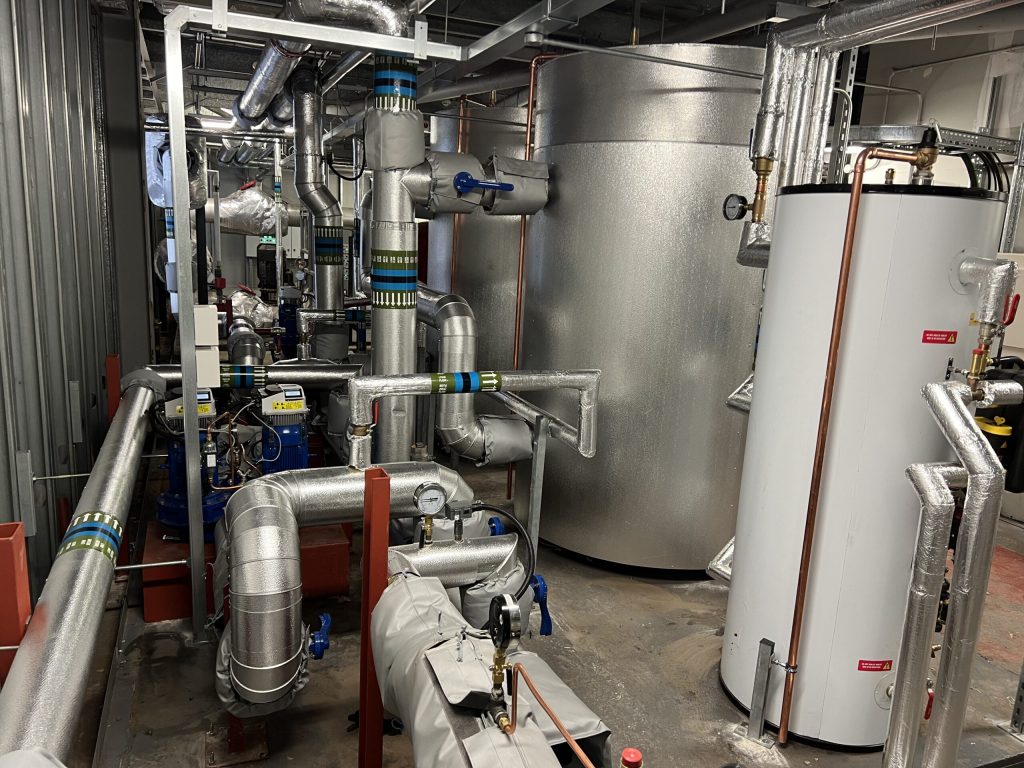
The cascade heat pumps operate at 84/73C, delivering heat at 82/71C through a separation heat exchanger, seamlessly replacing traditional boilers without disrupting the existing heat distribution system.
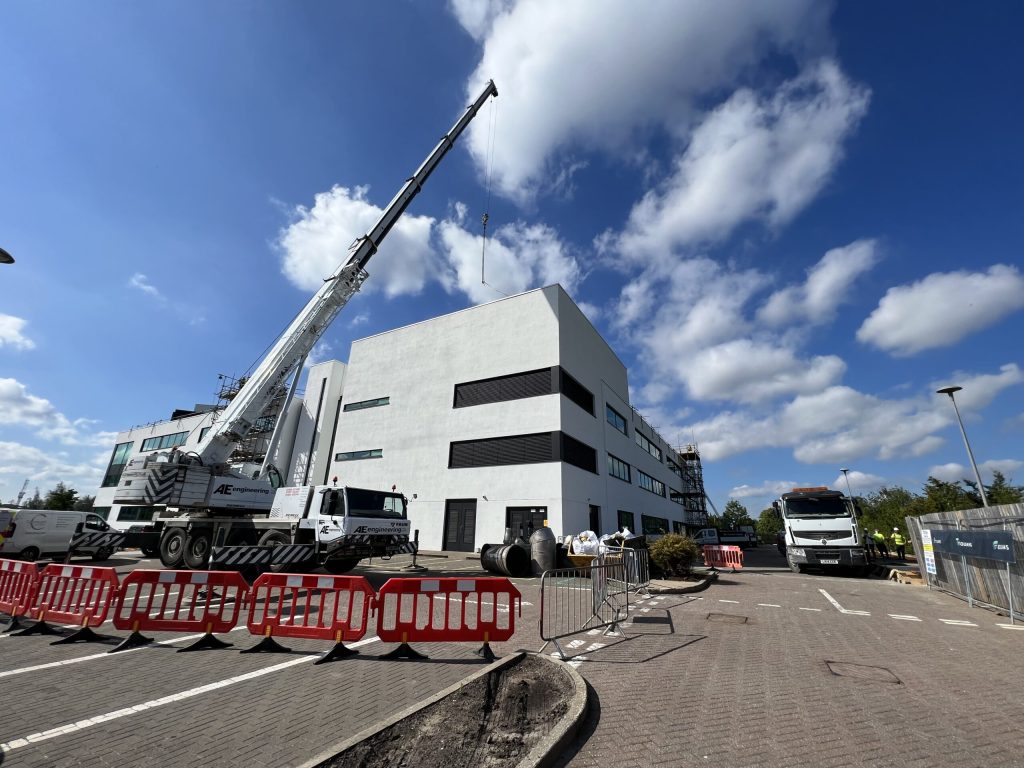
A new concrete slab supports the heat pumps, thermal stores, and plant room, while a pre-insulated pipe trench efficiently carries heat into the building’s internal plant room.
Thermal store sizes have been strategically chosen – 10,000L for the air source and 6,000L for the water source heat pumps, ensuring optimal performance.
To further enhance efficiency and support the gas removal to site, we replaced 3x gas-fired water heaters with 3x packaged units for the domestic hot water with inbuilt plate heat exchangers to maintain temperature differentials connected to the high temperature heat pumps.
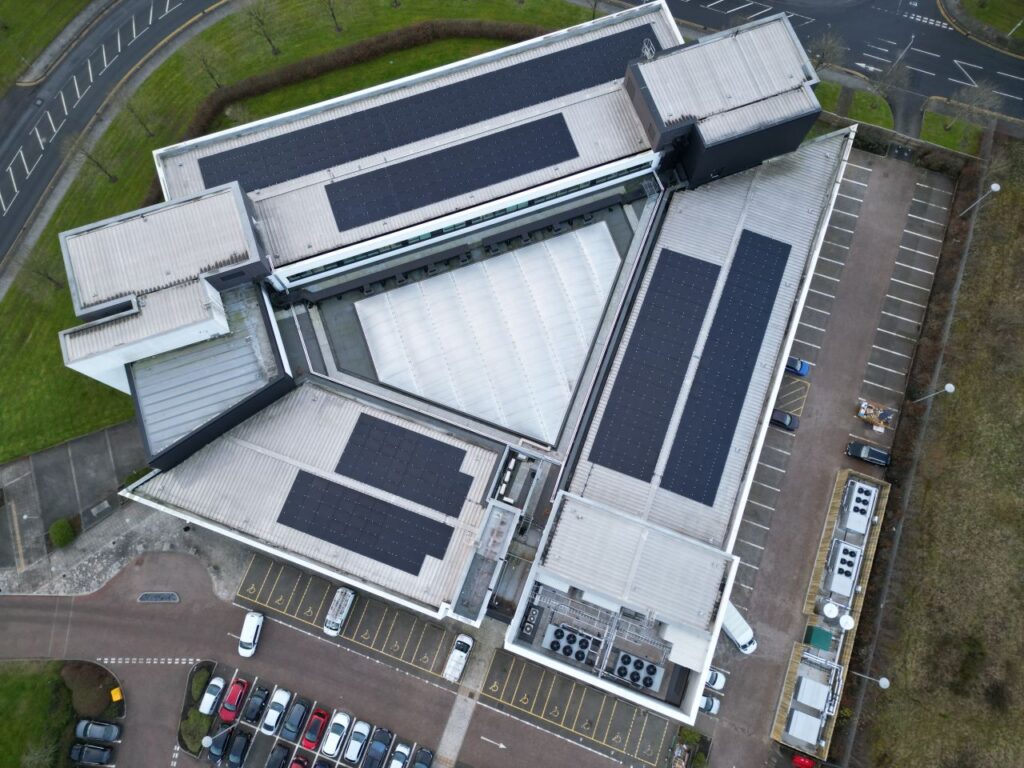
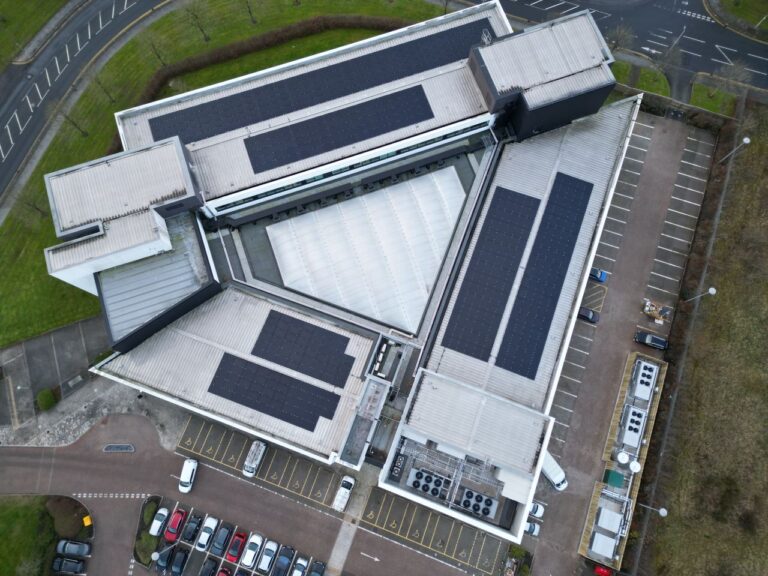
The project also involved the installation of a 206kWp Solar PV system with Solis inverters and 509 JA solar panels across the Centre’s roof using Sflex mounting system.
In addition, existing lighting was replaced with energy-efficient LEDs, while the Building Management System (BMS) panel was updated to work seamlessly with the new technology, enabling remote Cloud-based viewing, monitoring and control.
The M&E team also replaced two chillers on the roof which feed the building and server rooms with chilled water to keep the required areas cooled. These required low-voltage electrical work and associated building works to effectively complete the task.
The Result
This energy decarbonisation project has resulted in the new pumps achieving a combined Coefficient of Performance (COP) of between 1.9 and 2.6, while the solar system generates 156,000 kWh per year.
The centre is now significantly more sustainable and has, despite a growing number of business users, a more efficient COP and a smaller carbon footprint.